
Palm Bay Address History Sources
The useful starting source changes with the era. The current parcel supplies the stable identifiers, deeds connect owners, and directories or census schedules may add household evidence.
| Source | Years It Covers | Where Held | What It Shows |
|---|---|---|---|
| Property roll | Current; prior sales depth unverified | Brevard Property Appraiser | Owner, mailing and situs addresses, legal description, structure clues |
| Recorded deeds | 1981 to present online; earlier branch books | Brevard Clerk | Transfers, parties, legal descriptions, instruments |
| Hill-Donnelly | 1969-1985, 1987-1989, 1991-1999, 2001, 2002, 2004-2006 | Central Library, Cocoa | Address or telephone to listed occupant |
| Polk directories | 1984-1986, 1988, 1991-1994, 1997-1999 | Central Library, Cocoa | Named directory entries tied to Palm Bay |
| Federal census | Public through 1950 | NARA and library databases | Enumerated households at a dated place |
| Palm Bay permits | Exact archive start unverified | City Building and Growth Management | Work, contractor, dates, parcel or address |
A 1990s search may begin with a directory. A recent search should begin with the parcel and deed. For an early family trail, census, newspapers, probate, maps, and old jurisdiction names carry more weight than a modern address.
Start with the Palm Bay Parcel
Search the situs address in the Brevard Property Appraiser portal. Save the parcel ID or account, current owner, separate mailing address, legal description, subdivision, block and lot, and any sale or deed reference. These are keys, not conclusions about previous residents.
The legal description is especially valuable. Street formats can change, quadrant suffixes can be dropped, and a Palm Bay postal address may sit outside incorporated city limits. Lot, block, plat, and parcel identity can still tie the land to older instruments. A vacant parcel may lack a situs address, while one mailing address may serve an owner who lives elsewhere.
Address trail: current situs → parcel ID and legal description → acquisition deed → seller → earlier acquisition deed → branch books → dated household sources.
Walk the Brevard Deed Chain
The Brevard Official Records index is the core path for recent previous residents research. It searches names, book/page, instrument number, document type, record date, legal description, and parcel identification number. A deed names legal parties to a transfer. It does not certify that every grantee lived at the site.
- Use the parcel card to find the current owner's acquisition deed by parcel ID, legal description, instrument, or current owner as grantee.
- Read the deed for the grantor, who is usually the seller. Preserve the record date, instrument number, book/page, and land description.
- Search that seller earlier as a grantee. Try `Last, First`, initials, former names, suffixes, and spelling variants.
- Repeat the handoff from seller to earlier buyer until the online index reaches January 1, 1981.
- For an older chain, contact a Clerk branch for deed books and historic grantor-grantee indexes. Use RCRC, mail, phone, or the counter for a defined record and copies.
- Grantor
- The party transferring an interest, often the seller.
- Grantee
- The party receiving the recorded interest, often the buyer.
- Chain of title
- The linked sequence of recorded transfers for the same land.
- Legal description
- The recorded wording that identifies land apart from its street address.
Clerk Recording is available at 321-637-2004 and PO Box 2767, Titusville, FL 32781-2767. Ask for process help and a defined record, not a private identity conclusion.
Brevard Records Before 1981
The web cutoff is firm: online Official Records begin January 1, 1981. Earlier title work requires the Clerk's physical deed books or historical grantor-grantee indexes. The exact earliest book and microfilm inventory were not verified, so contact the Clerk with the legal description, name variants, and an estimated year range.
The Clerk's official records coverage guide introduces that record family and is shown below.
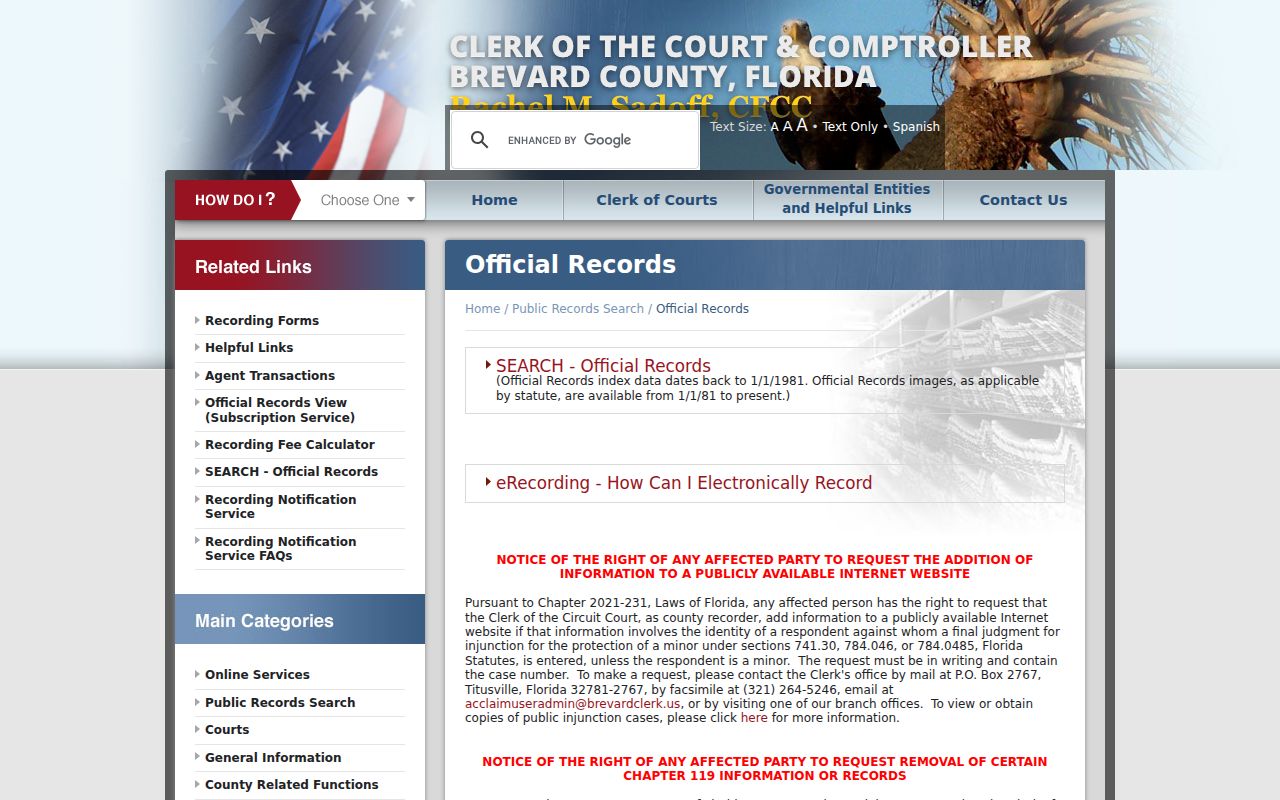
The captured page supports the official-records route; branch staff and authoritative copies remain the fallback when a web image or early index is absent.
RCRC can provide name-and-year research, plain pages, certification, and expedited work for stated fees. A precise request is best: identify the party, approximate dates, record type, book/page or instrument if known, and preferred copy form.
Reverse Palm Bay Addresses
Hill-Donnelly criss-cross telephone directories are the strongest local bridge from address to listed name. The Central Library in Cocoa holds a noncontinuous run from 1969 through 2006. The method is a local quirk: these volumes search by address or telephone, explicitly not by name.
Use an address established by a deed or property record, then check the nearest available volume before and after a transfer. A name that appears only after a sale may support an arrival window. A later disappearance supports a departure window, but missing publication years prevent exact dating. The directory lists a published entry, not every person in a home.
The R.L. Polk Melbourne run includes Palm Bay rather than filing it under a separate Palm Bay heading. For full holdings and publisher context, consult the Palm Bay city directory page. Here, the book serves one purpose: testing a single address across time.
Pair Palm Bay Directories and Census
The latest public federal census is 1950 under the 72-year rule. Local Polk books begin much later, so no single series spans the gap. Move in dated steps and never invent a missing year.
- Locate the property or family in the 1950 census, noting the address, household members, and enumeration context.
- Check newspapers, deeds, probate, vital indexes, and maps between census and directory years.
- Test the nearest available Hill-Donnelly address entry beginning in 1969.
- Compare Palm Bay-bearing Polk volumes from 1984 onward, including the documented gaps.
- Use deeds and permits to explain changes in owner or structure without calling either an occupant record.
Florida Star, Cocoa Tribune, and Melbourne Times microfilm at Central can add death notices, social mentions, sales, and local context. Reconcile newspaper claims against official records.
Tillman Changes the Search
Palm Bay's earlier name matters when tracing previous residents. The settlement was known as Tillman from the 1887 homestead era. Roughly 200 residents petitioned for the Palm Bay name in 1925, and incorporation followed in 1960 with 2,808 residents.
Search both Tillman and Palm Bay in catalogs, newspapers, oral histories, and maps. Brevard itself was created by an 1854 act effective in early 1855 from former St. Lucie County territory, reaching current boundaries in 1905. Very early records may therefore sit under another county heading. These shifts explain a failed modern-name search without implying that records were destroyed; no reliable local courthouse fire or flood loss was found.
Palm Bay Permits Date Change
Palm Bay permit records can show when a structure was built, altered, repaired, or inspected. They may name an applicant or contractor and tie activity to an address or parcel. They do not establish who occupied the site. Search the permit GIS, call Building at 321-953-8924, or send a narrow city public-records request when the online map lacks the needed detail.
Road-renaming files provide another useful clue. Palm Bay applications require an abutter mailing list and E911 coordination. A legal description can bridge an old and new road label. No supported citywide street-renumbering year was found, so do not force one into the address timeline.
Note: Palm Bay's building record can date physical work, but a permit applicant and the previous residents may be entirely different people.
Archives Beyond Palm Bay
The Central Library genealogy area, Brevard Historical Commission, State Library, Library of Florida History, and Florida State Archives offer different fallback channels. The Central shelf holds directories, newspapers, vital indexes, and Sanborn maps, though no Palm Bay Sanborn title or year was verified. The Historical Commission preserves early newspapers, maps, and oral histories.
Explore the Florida State Archives source shown below for catalog-level leads.
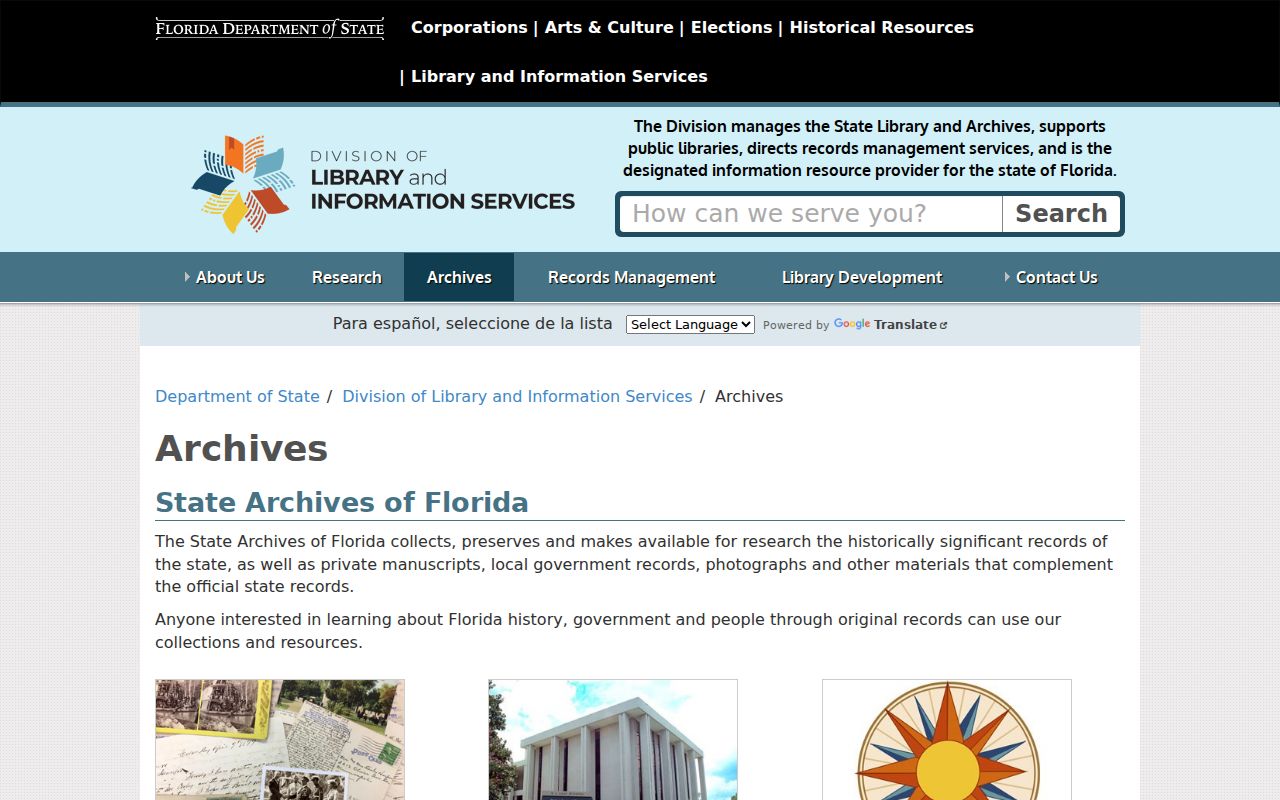
The archives view is a gateway to state and county context, not proof that a specific Palm Bay house file exists.
Central Documents and Genealogy can be reached at 321-633-1794. Palm Bay Public Library provides computers and database access, but the deeper directory shelf is at Central in Cocoa. State Library reference staff can be reached at 850-245-6682.
Close a Palm Bay Resident Trail
Probate and newspapers can carry a past owner or listed occupant beyond the address. Begin with a Brevard probate docket for a deceased person, then request public petitions, orders, or a filed will as allowed. Follow the personal representative and interested parties into deeds. An obituary may add relatives, former places, and dates, but it is secondary evidence.
A lawful heir search can join probate, deeds, newspapers, and directories without treating any one source as complete. If no Brevard estate appears, check the county of domicile supported by a death record or deed. A deed beneficiary is not necessarily the whole heir class.
Lawful use. Research previous residents for family history, house history, or respectful reconnection. Never use public names or addresses to track, harass, intimidate, or harm a living person.
Record conflicts rather than hiding them. Mailing address, situs, deed date, directory year, and census date may each tell a true but different part of the address history.